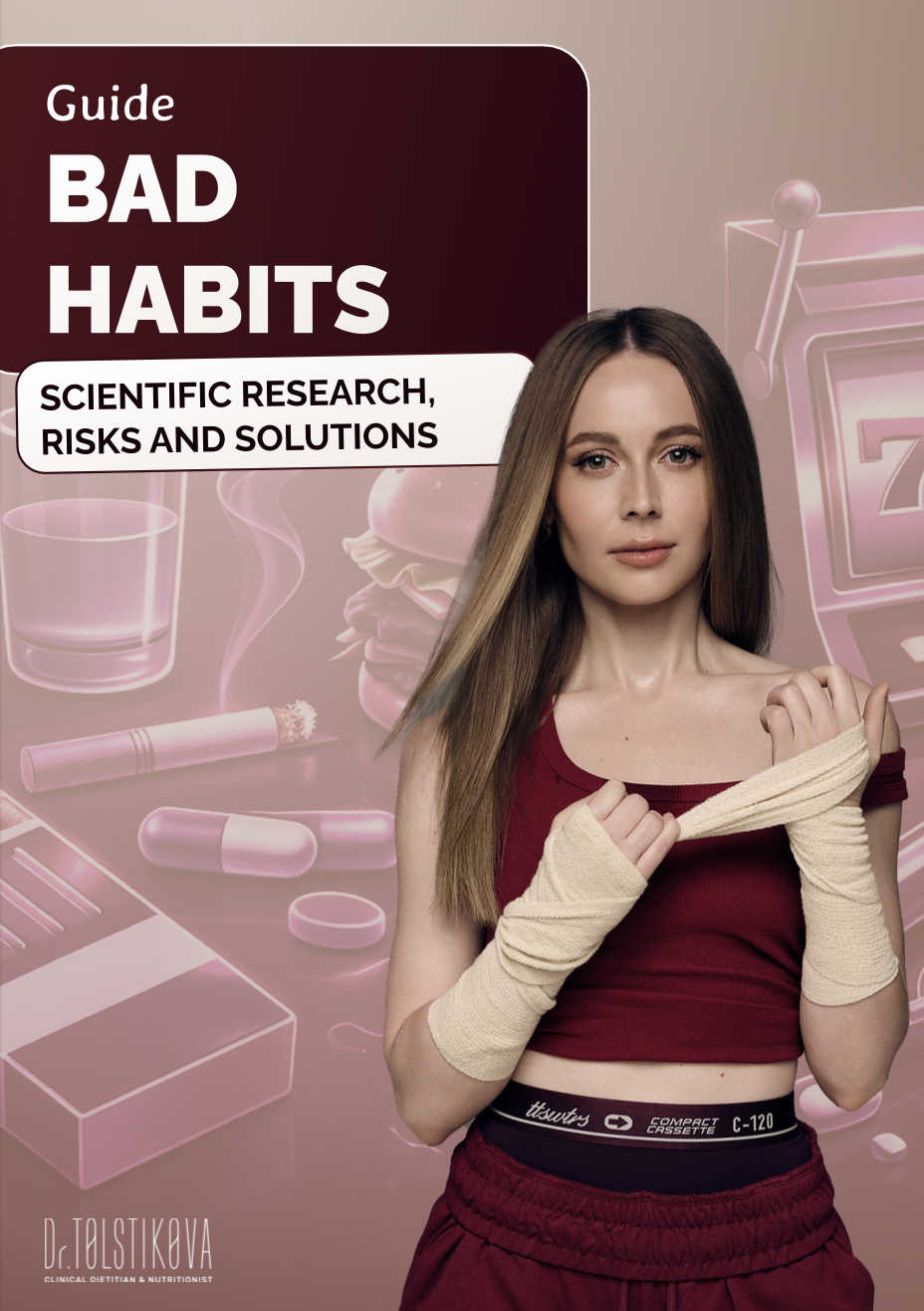
Guide “Bad habit: scientific research, risks and solutions”
1500 UAH
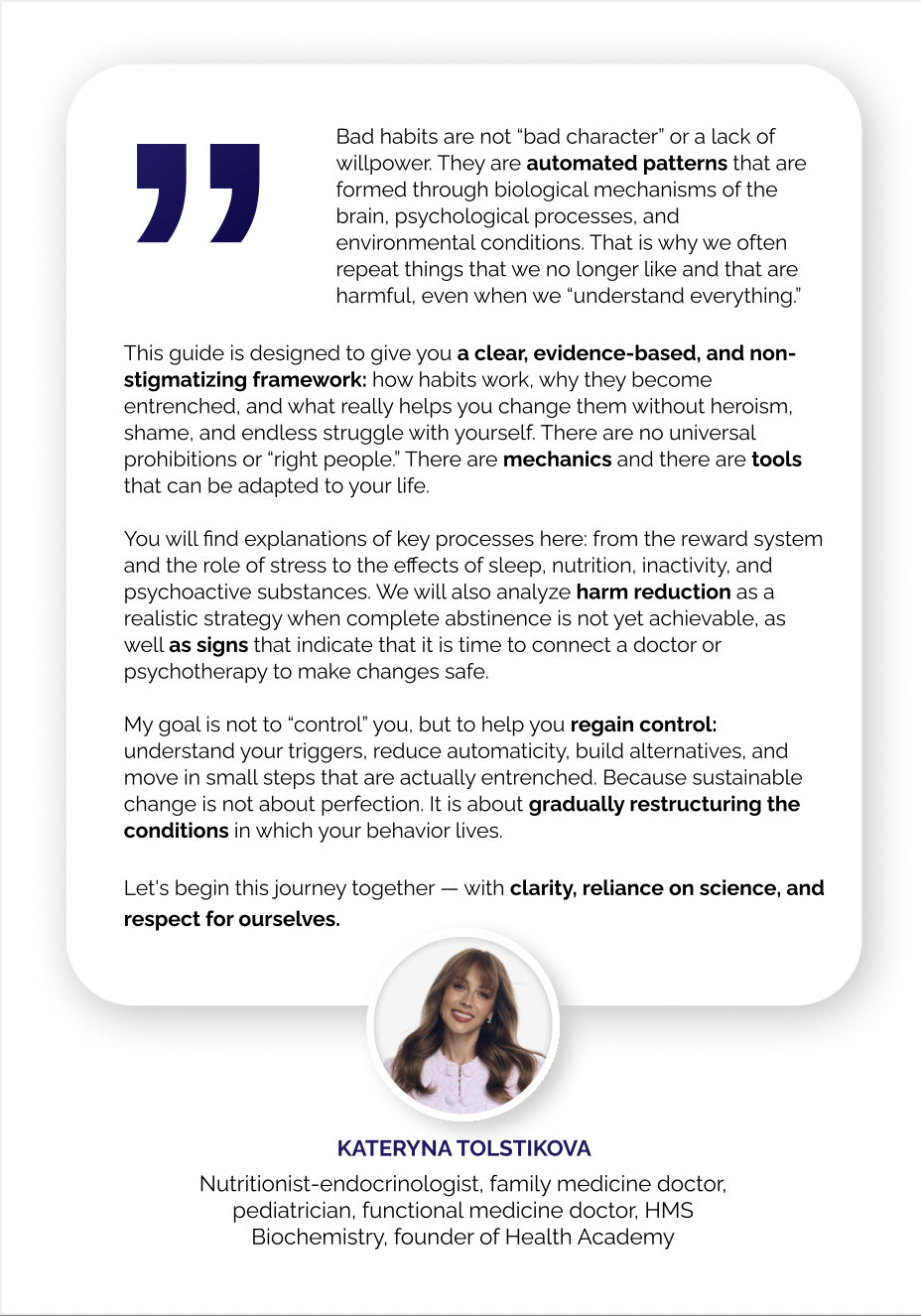
This guide is about harmful habits as automatic behavioral patterns, not “weak willpower” or a moral failing.
It explains what triggers a habit, what function it serves (stress, energy, emotions, attention, sleep), and how to create change realistically — without extremes or guilt.
What this guide covers
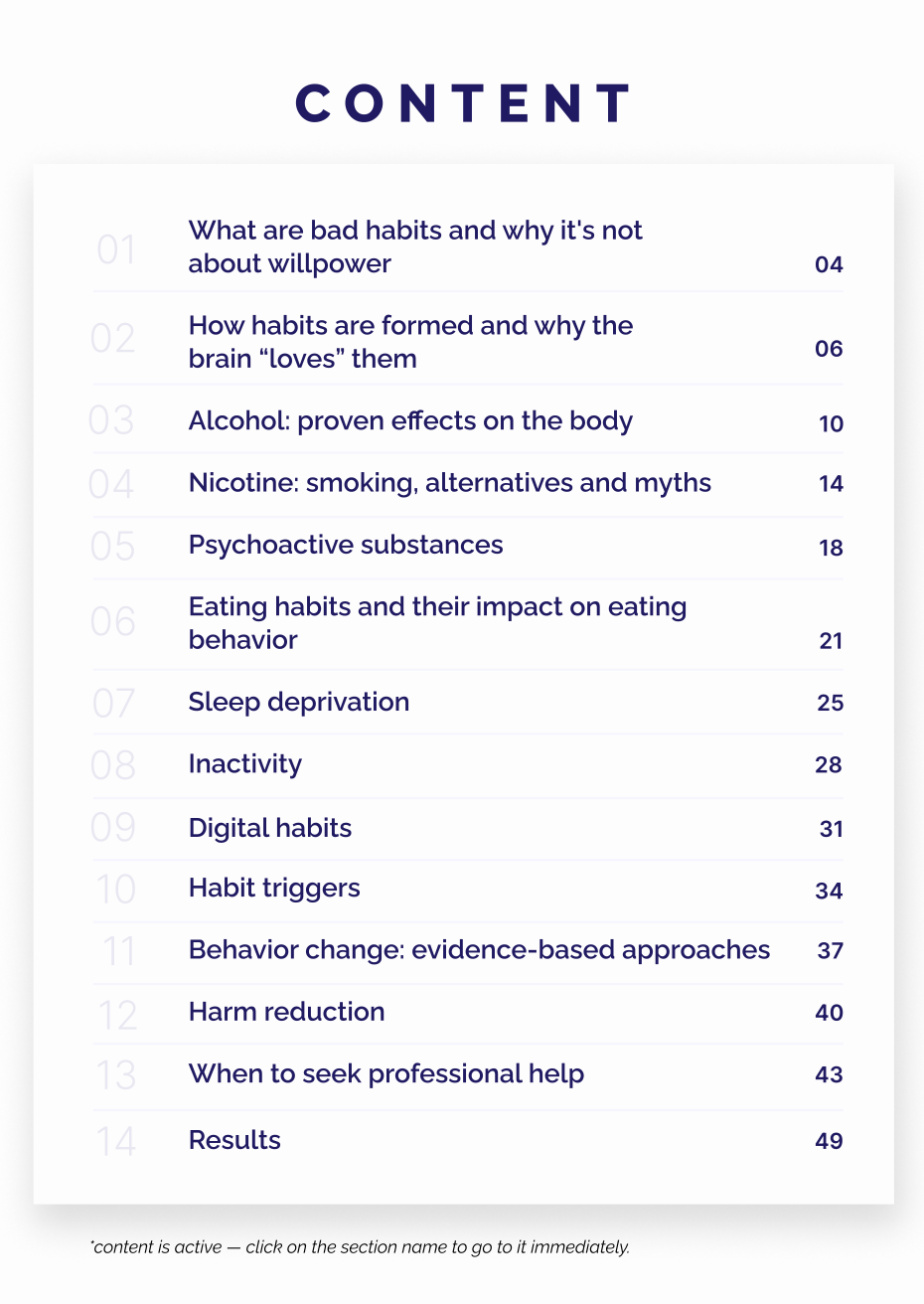
- How habits are formed: trigger → action → reinforcement (including the role of dopamine, without oversimplification).
- Why “knowing something is harmful” often does not change behavior: immediate reward, limited resources, stress, sleep, and environment.
- The difference between a habit / problematic behavior / addiction, and how tolerance develops.
- Points of intervention: triggers, environment, stress management, recovery, plus evidence-based approaches to change (including harm reduction).
- Practice section: self-assessment, trigger mapping, action plan, risk checklists, and markers for when professional help is needed.
Who this guide is for
- If you have recurring habits (alcohol / nicotine / food / scrolling / sleep deprivation / physical inactivity), and “just pulling yourself together” does not work.
- If you want to change your behavior step by step, without shame or self-blame.
- If you are a professional and need an evidence-based framework for working with behavioral patterns.
- If you are a loved one who wants to better understand the limits of support and when it is time to seek specialist help.